How to Give Feedback a Writer Can Use
The worst note I ever gave was four words long, and it took a mail carrier eleven months to survive it.

The worst note I ever gave a writer was four words long, and I gave it on a train.
The note
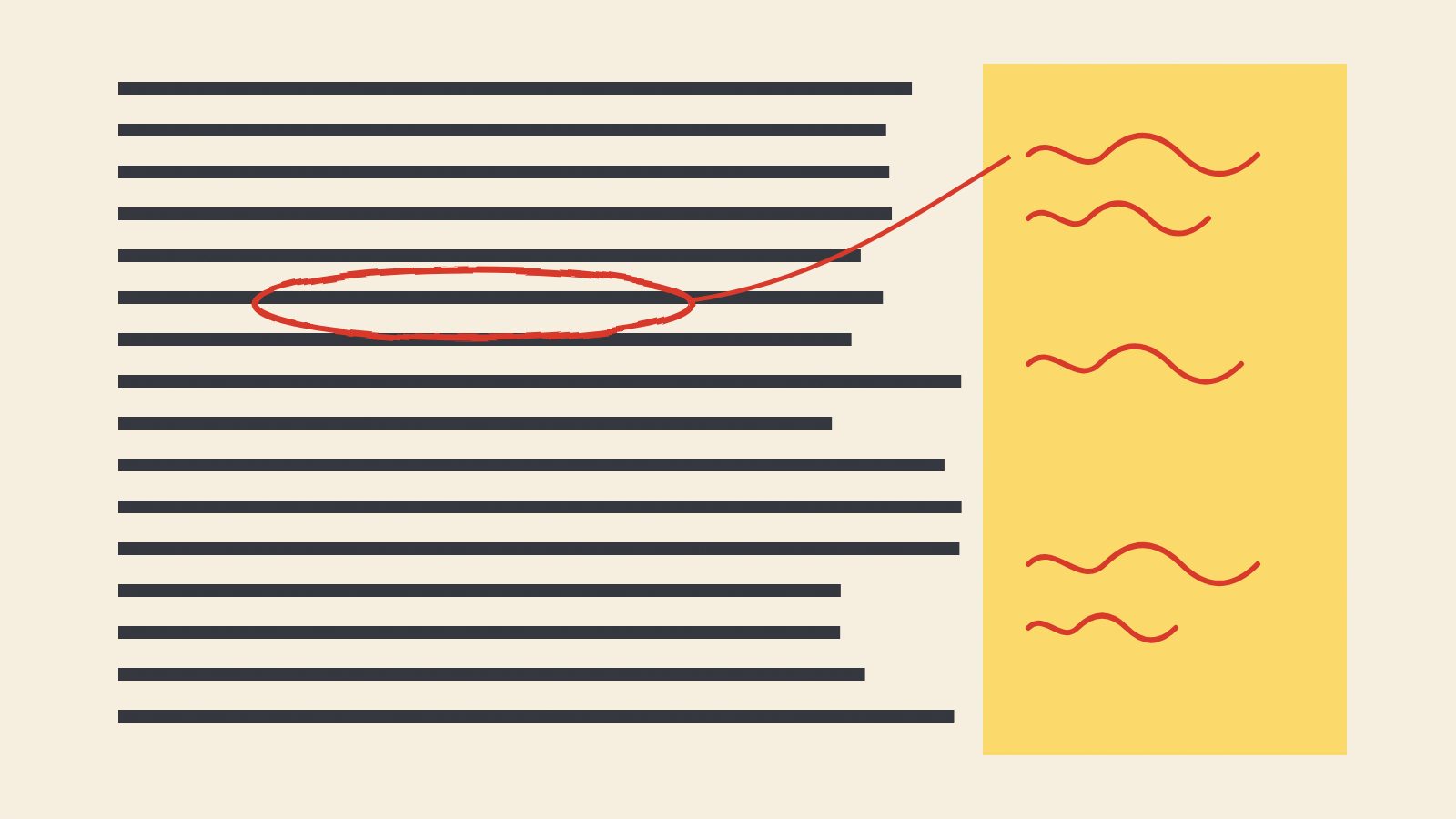
In the spring of 1996 I was editing a first novel by Wendell Achterberg, a rural mail carrier from the north end of the state, who had spent eleven years on four hundred pages about a family on his route. It was good, and it had something wrong with it that I had not yet found. I read chapter three on my way home one evening, reached the bottom of a page where the mother, Lena, comes into the kitchen, and wrote in the margin: I don’t believe her. I was young and busy. I sent the pages back and went on to other books.
Eleven months later a box arrived. It held nine versions of chapter three. In the first, Lena was kinder. In the second, she was harder. In the fifth she had acquired a limp. By the seventh she had been cut altogether, and the chapter was largely about a dog. On top was a letter in the upright hand of a man who has spent his life making sure things get to the right house.
“Dear Ms. Vance. I have tried her a number of ways. Can you tell me which part you don’t believe? She is my mother. I took most of what she says down from her letters.”
I could not tell him, because I did not remember. I had to go back and read the original with a pencil, slowly, like a detective at the scene of my own crime, and it took most of an evening to find it. Lena finds forty dollars in her son’s coat, on page 61, and doesn’t ask him where it came from. That was all. This is a woman we have just watched count out stamps. I had stopped trusting her at that line, and I read everything after it in a sour mood and blamed her for that too.
The real woman, of course, had not asked. What the novel needed was a single sentence, earlier on, that let us see why she wouldn’t. Wendell wrote it in an afternoon. He had by then lost most of a year and a good deal of his nerve, and he told me later he hadn’t written a line of anything else in that time, because he figured he must not know his own mother.
What was wrong with it
I had delivered a verdict with no evidence. It sounded like editing. It had the pencil and the margin and the tone. But it was a report of my mood disguised as a fact about Lena, and there was nothing he could do with it except suffer. A writer has four hundred pages and your note, and the note has no address.
Compare: “On page 61, when she finds the money and doesn’t ask, I stopped trusting her. I’d just watched her count stamps.” Now he has a house number. He can fix it. He can also tell me I’m a fool, which is his right, and which he can’t do with a verdict, because a verdict doesn’t say anything specific enough to be wrong.
You are a witness
The one thing a writer can’t do alone is read the thing for the first time. That is your entire qualification. You’re not there as a judge, and you’re rarely there as a better writer. You are a witness to an event, the event being what happened to you between page 1 and page 400, and a witness says where she was standing and what she saw.
Two corollaries, both of which I learned late.
Say what’s working, with the same precision. Writers cut their best lines all the time, out of fear, because nobody told them those were the good ones. “Keep the stamps” is a note.
Hold off on fixes unless you’re asked. Your fix will probably be wrong, and it will also be sticky. The writer will spend a month trying not to think about the limp you suggested.
Questions to ask while you read
Keep a pencil in your hand and mark the page when these happen, because by the end you will remember nothing but your mood.
Where did you stop and go do something else?
Where did your eye skip ahead, even by a line?
Which sentence did you read twice, and was that pleasure or confusion?
What was the last thing you believed without effort?
At the end of each section, what did you expect to happen next?
Who did you want more of? Who could you lose without noticing?
If a friend asked what this is about, what would you say? Then ask the writer whether that’s what they thought they wrote.
Before you start, ask how finished it is. Nobody needs a comma query on an ending that may not survive the month. And when you’ve finished, choose three things. You will have found forty. The writer has only the one nervous system, and three notes get used, whereas forty get put in a drawer along with the manuscript.
Then say them out loud if you can, in a room, with the page number first. It’s much harder to be grand when someone is sitting across from you holding page 61.
The afterword
Wendell’s novel came out in 1999 as Rural Route Nine. It sold about six thousand copies, which for a first book by a mail carrier is a parade, and the mother is the best thing in it. He’s eighty-four now, and we write to each other, on paper, because he considers email a threat to a good union job.
I sent him this essay in draft, since it’s his story and he’s entitled. It came back in about a week, with one pencil mark on it. Near the top, beside the sentence where I say I was young and busy, in that upright hand:
I don’t believe her. You were thirty-two, you knew better, and you wanted to get off the train.
I’ve left the sentence in so you can find it.