Cut the First Paragraph
A thirty-year habit of removing the part you wrote to get warm, and the one time it failed me.
Whatever you wrote first, you wrote to get warm.
That is fine and necessary. Nobody starts cold. You sat down without knowing what you thought, so you typed a few sentences about the large subject in the general vicinity of your actual subject, the way a person walks up and down the sidewalk before ringing a stranger’s bell. Then you rang the bell, in the second paragraph or the third, and the piece began. You simply never went back to tell the reader she could skip the sidewalk.
I edited books for thirty years, first at Harrow & Lisle and then on my own, and by a rough count I have removed the opening paragraph from some eleven hundred chapters, essays, and proposals. About a dozen authors have asked for theirs back. One of them was right, and I will get to him.
What it looks like
This is a real opening, lightly disguised, from a retired county surveyor writing about his childhood.
Memory is a strange and slippery thing. We like to think of the past as a fixed place we can return to, but anyone who has tried to reconstruct their childhood knows how unreliable our recollections can be. Growing up in a small house in the 1950s, I learned early that families keep secrets, and that those secrets shape us in ways we may not understand until decades later.
Nothing in that paragraph is false. Nothing in it is anything. You could staple it to the front of four thousand memoirs. Here is how his second paragraph began.
My mother kept the deed to the house in the freezer, under the peas. She told us it was in case of fire. We never had a fire, but by my count we had three different men come to the door asking for my father, and not one of them thought to look in the freezer.
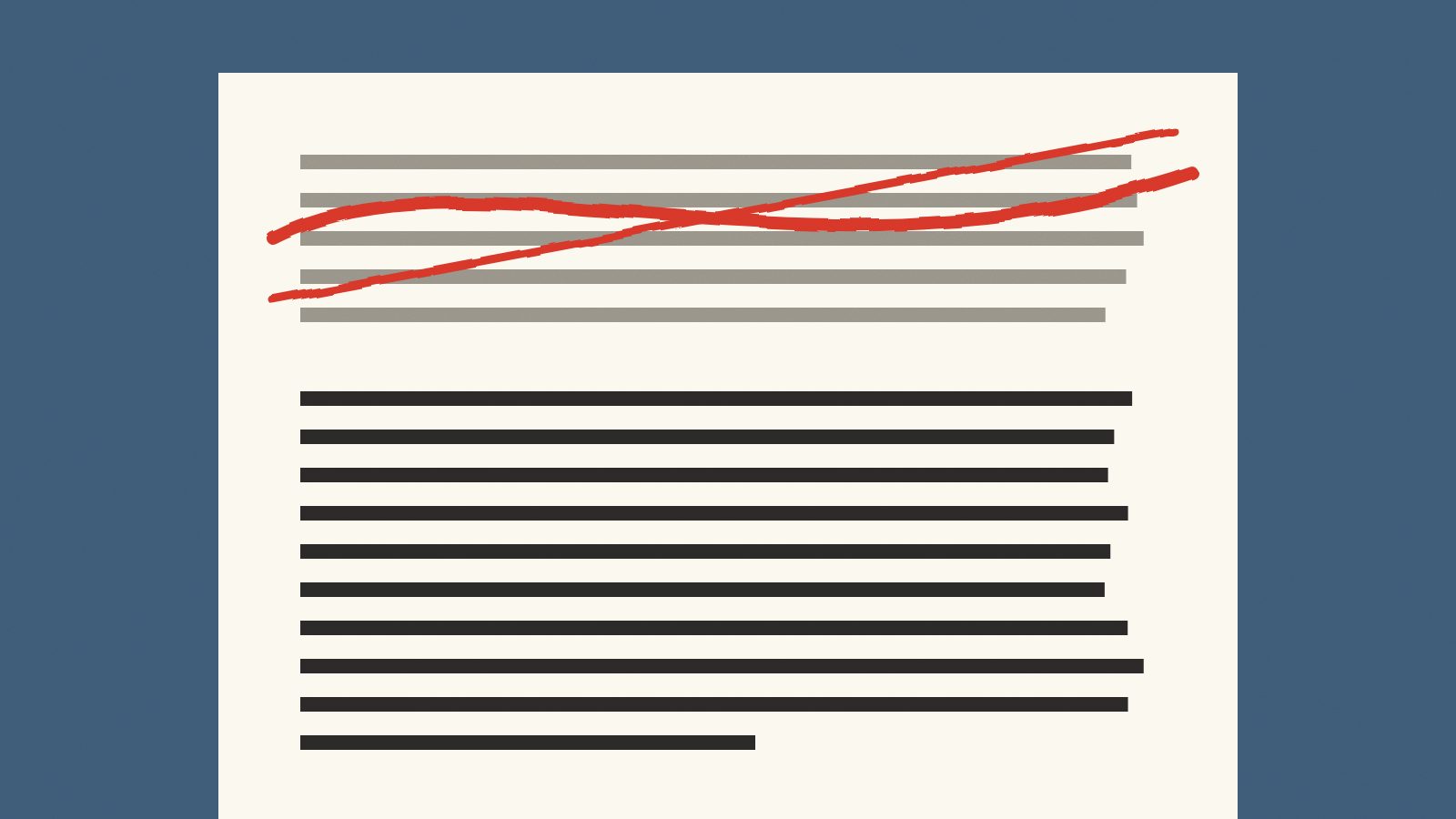
I drew a line through the first paragraph and wrote Start here? beside the peas. He telephoned to say I had removed his theme. I told him his theme was still in the freezer, where readers could find it themselves and feel clever. A reader will forgive you almost anything except being told what she was about to figure out on her own.
He kept the cut. He also, I noticed, stopped saying “memory” for the rest of the book, which improved it further at no cost to me.
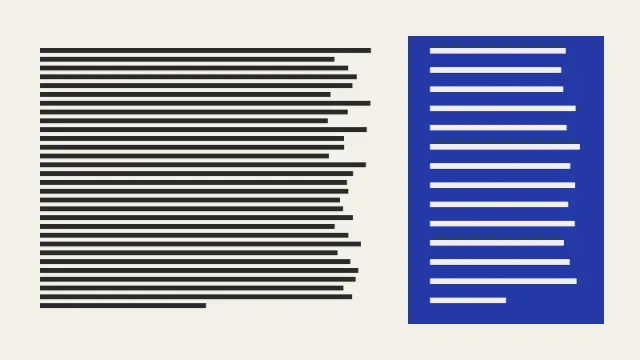
It works on office prose too, where the stakes are higher because nobody is obliged to finish. A before:
I wanted to reach out to share some thoughts following last week’s productive discussion of the fall timeline. As we all know, there are a number of moving pieces, and I appreciate everyone’s flexibility as we continue to navigate them.
And the same message, with its first paragraph gone and its second paragraph promoted:
The printer can’t deliver before October 9. By Friday we need to choose between a smaller run and a late launch.
In all my years of reading other people’s mail, no one has ever written back to ask after the moving pieces.
The test
It takes a minute, and you need one hand.
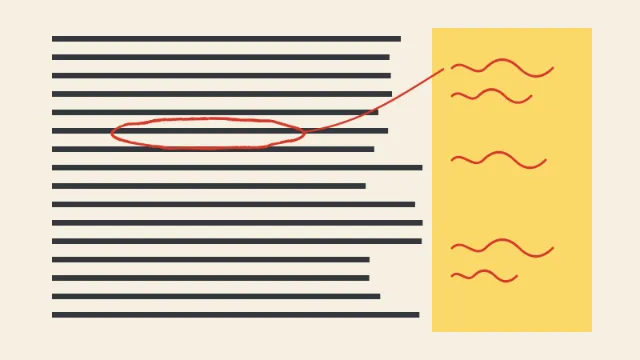
Cover your first paragraph and read from the second.
Ask what the reader no longer knows. Usually it is a name, a place, or a year. Write it down. It will come to fewer than ten words.
Fit those words into the new opening, as a clause if you can.
Now cover the new first paragraph and ask again. Stop only when something actually falls over.
Most people stop too early because the second paragraph is also a little embarrassing, and that feels like evidence. It is not evidence. I once took four paragraphs off the front of a very nice book about bees before anyone was stung.
While your hand is out, look for the usual suspects:
The dictionary, which has never once been consulted by a person in the grip of a good story
The sweep of history, including anything since the dawn of anything
The itinerary, in which you tell me what this essay will do instead of doing it
The apology, in which you tell me you are no expert, and I wonder why I’m here
The weather, unless somebody dies of it
Unless somebody dies of it
I learned that last clause the expensive way. In 2004 I was editing a novel by Ansel Dray, a long, patient book set in a valley town. It opened on half a page of rain. Rain on the slates, rain on the feed store, the reservoir going the color of tea. I took it out, and I was pleased with myself, and I sent the pages back with a note saying the book really began with the sisters at the bus stop.
His reply was a postcard. It said: Page 312, Ottoline.
I went to page 312, which is where the dam goes. Everyone in the town has spent three hundred pages not mentioning the rain, because the reader was told about it on page 1 and they are used to it. Without that opening, the flood arrived like a bus from nowhere. With it, the reader has been watching the water rise since before she met anyone. I put the half page back, with an apology and a bottle of something, and he has never let me forget it.
So a first paragraph earns its keep the way any other paragraph does, which is that something later needs it. Dray’s was load-bearing. In thirty years I have met perhaps ten more that were. You will know if yours is one, because when you lift your hand away, page 312 will be standing there with its arms folded.
This piece used to begin with my grandmother, who killed chickens with the same pair of shears she used to take up the hems of our good dresses. It was a lovely paragraph with a very strong last line, and I was sorry to see it go. You’d have liked it. You’d also have been a hundred and ten words later getting to the peas.