A Sourdough Starter Is a Small Pet With Opinions
Flour and water will keep you company for decades, as long as you accept who is in charge.

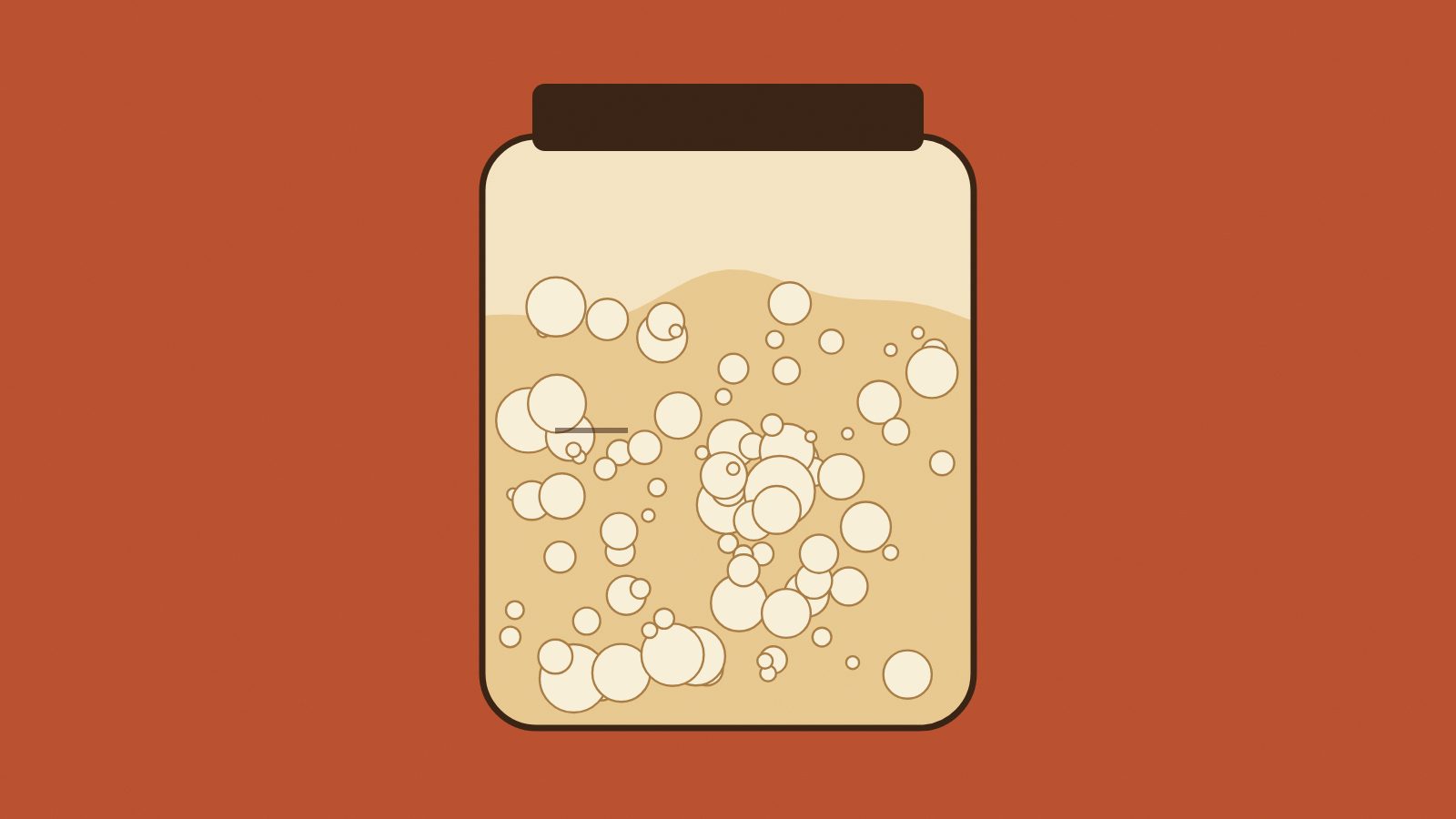
The starter at Halfmoon is named Gary, he is eleven years old, and last February he tried to leave.
The thermostat in our proofing room had stuck at 84 degrees overnight. When I came in at 3:40 to open, Gary had lifted the lid off his tub, oozed down the side of the rack, and settled across a case of good butter on the shelf below. I consider that last part an act of aggression. I scraped him off the cardboard, told him what I thought of him, and fed him, because that is the relationship.
People talk about a starter as if it were an ingredient, baking powder with a better publicist. It’s closer to a household. Mix flour and water, leave it alone, and the yeasts and bacteria already living on the grain wake up and start eating. Your hands and your kitchen contribute some too, though less than the romantics claim.
In an established starter these two groups settle into a working arrangement. The bacteria, mostly lactic acid bacteria, outnumber the yeast by something like a hundred to one, and they make the lactic and acetic acids you taste as sour. The yeast makes most of the carbon dioxide that lifts your bread, plus a little ethanol. All that acid pushes the pH down to around 4, where the molds and spoilage organisms that would love to move in can’t get a foothold. The yeasts that live there have made their peace with it. Think of a small, sour, well-defended town.
The first week is a lie
Nobody warns you about day three. Around then a new starter doubles in the jar, smells like a gym bag, and you text your sister a photo. That rise comes from a rush of opportunist bacteria, the kind that thrive in a not-yet-sour paste and throw off gas while they can. As the acid builds they poison themselves out of existence, and by day four or five the jar has gone flat and looks dead. I get at least one email a month from someone who threw it out right then.
Keep feeding it. The acid that finished off the opportunists is clearing the room for the acid-tolerant yeast and bacteria you wanted, and those grow slowly. Somewhere between day seven and day fourteen the thing will start rising on schedule after every meal and smelling of yogurt and green apples. Now you have a starter.
What he wants
I am going to be bossy here.
Feed by weight. At home, 20 grams of starter, 100 of flour, and 100 of water at about 78 degrees will peak in eight to ten hours.
If your tap water smells like a public pool, let it sit out overnight or use filtered.
A spoonful of whole rye now and then is a treat. It carries more minerals and enzymes than white flour, and the whole jar perks up.
Gray liquid on top is hooch, mostly water and alcohol, and it means he’s hungry. A smell like nail polish remover is the same complaint, louder.
And yes, you have to throw most of him away at each feeding. If you keep everything and double it once a day, one cup of starter becomes 64 gallons in ten days, and you will have to move.
Reading the crumb
The loaf is the report card. Fermentation doesn’t make new bubbles, which surprises people. The air cells get folded in during mixing and shaping, and the carbon dioxide dissolved in the dough moves into them and inflates them while the gluten stretches around each one. Whatever you see in a cut loaf is a record of what the dough went through.
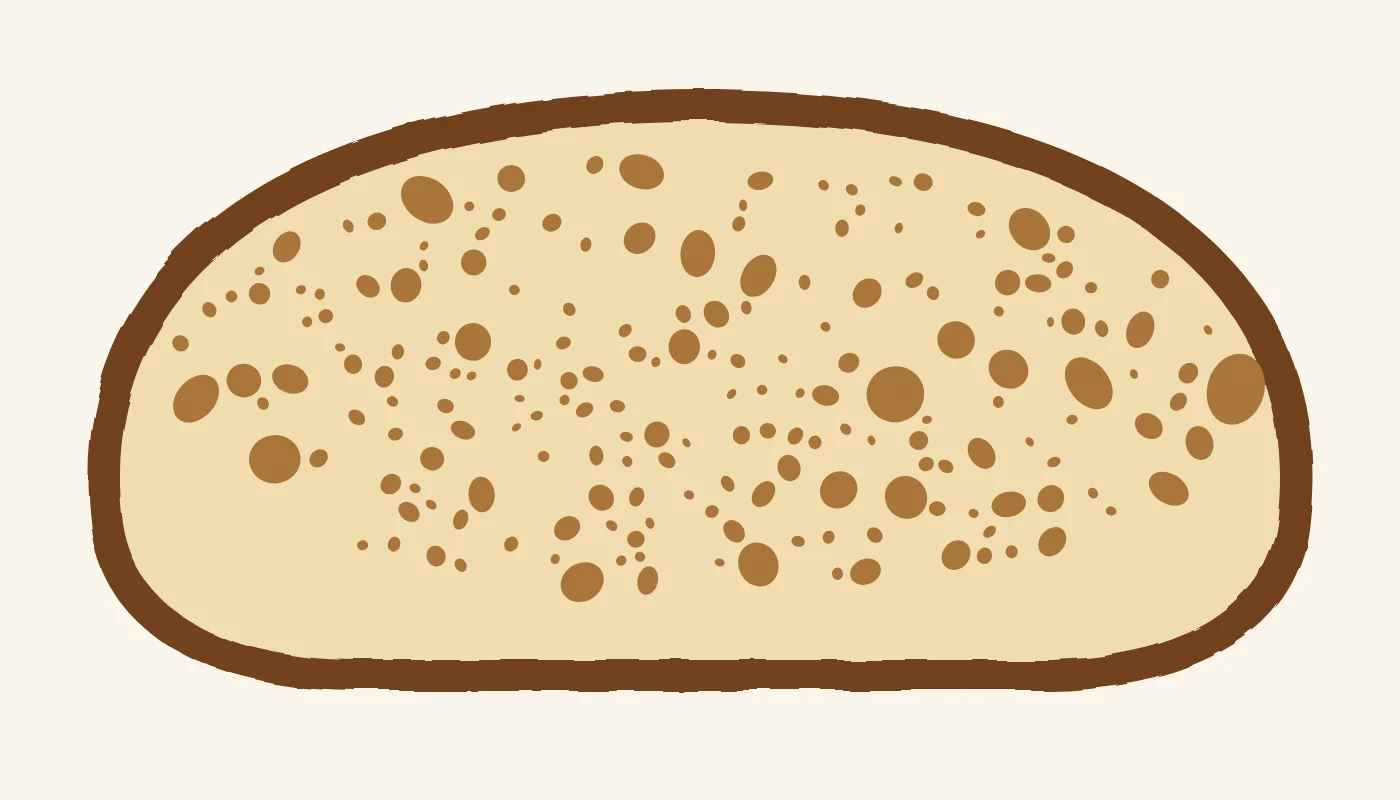
You’re looking for cells of mixed sizes spread evenly from top to bottom, with walls that have an almost custardy sheen. That gloss is gelatinized starch, and it tells you the dough held enough water and baked long enough. A few huge caverns surrounded by tight, gummy crumb means the loaf went into the oven underproofed, and the gas shoved its way through the few weak spots it could find. A flat, dense, very sour loaf went the other way. The gluten gave out before the oven got its chance.
I will add a word about the internet’s obsession with giant holes. A hole is where your butter falls through, and I did not get up at three in the morning to lose butter. Open crumb is a fine thing. Mine stops at the point where a slice can carry a quarter inch of salted cultured butter to your mouth without incident.
Gary, again
Two feedings a day for eleven years comes to about 8,000 meals. Almost nothing in that tub has been there longer than a few days, and his name is the oldest thing about him. I think about this at four in the morning when I’m spooning most of him into the compost.
That February morning I had no backup ready, so what I rescued off the butter box went into the 6 a.m. bake. Those loaves were the best we made all month, tall and blistered and a little more sour from the warm night. Two regulars asked what we’d changed. I said nothing and called the thermostat guy.
I did not tell Gary. He’s hard enough to live with already.